
Badlands and Montana Sunsets
Route
Monday, October 19th. It was a frigid night outside Bismarck, ND. We awoke to a hard layer of frost on everything, but we were delightfully cozy curled up in the tent with layers piled on. This time we kept the vents open at the top of the tent, which really helped with the condensation compared to our Wisconsin night. There was still some, but it wasn’t running down the walls of the tent this time.
But man, let me tell you, those Canada geese on the river never shut the hell up! 10pm, 12am, 2am, 4am, forever squawking back and forth. You'd think they were nocturnal. They must be congregating on the river before forming their signature flying Vs in the sky, Mighty Ducks style, to head south for the winter. I finally had to put in earplugs to get some sleep. The great horned owls were the opposite. The male calls out with a deep “hoot-hoot-hoot” into the darkness, awaiting his mate's higher, singular and quicker, “hoot.” It’s a love language that predates our time. We heard their calls in Wisconsin too. A soothing love song to fall asleep to.
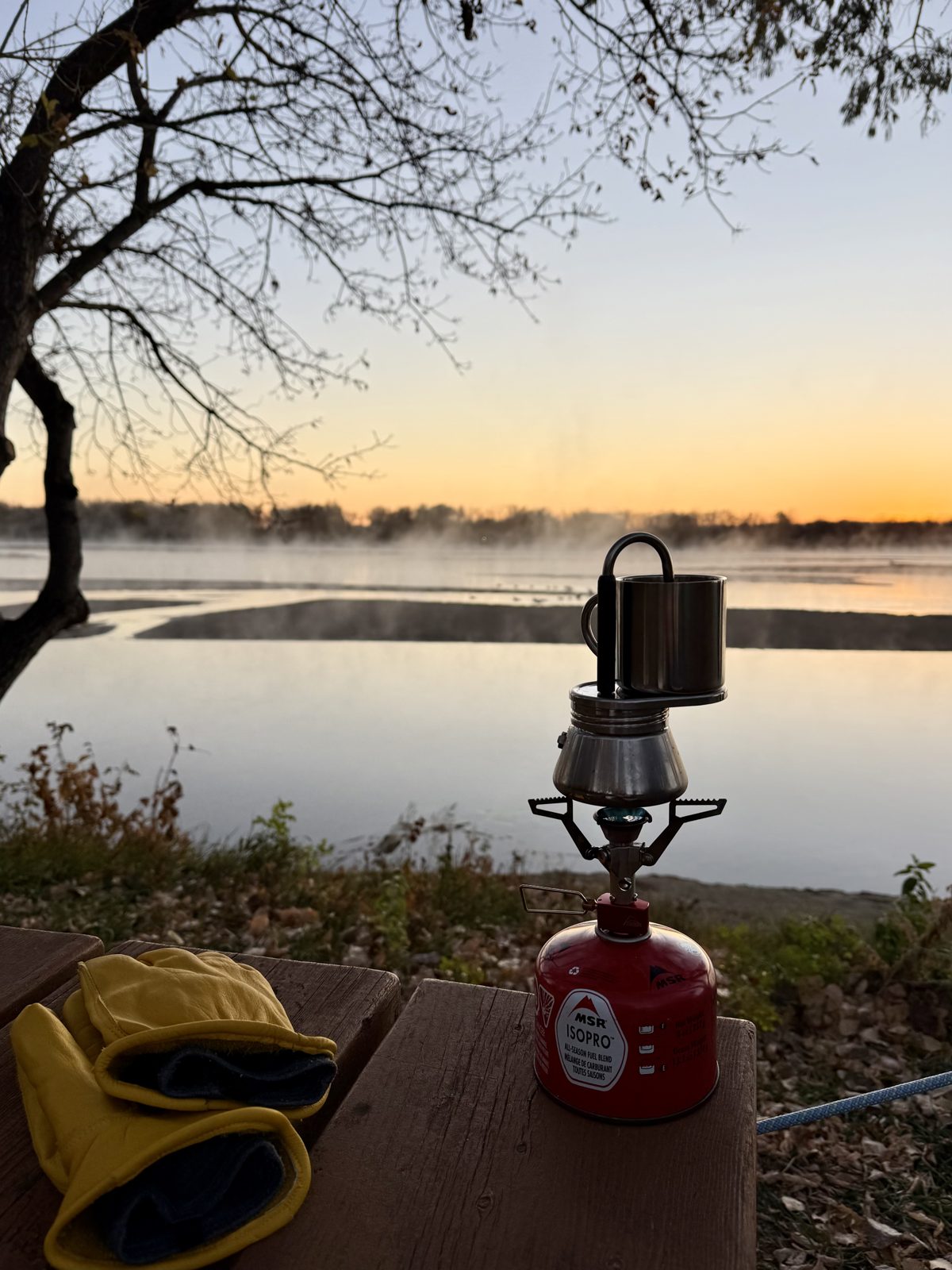
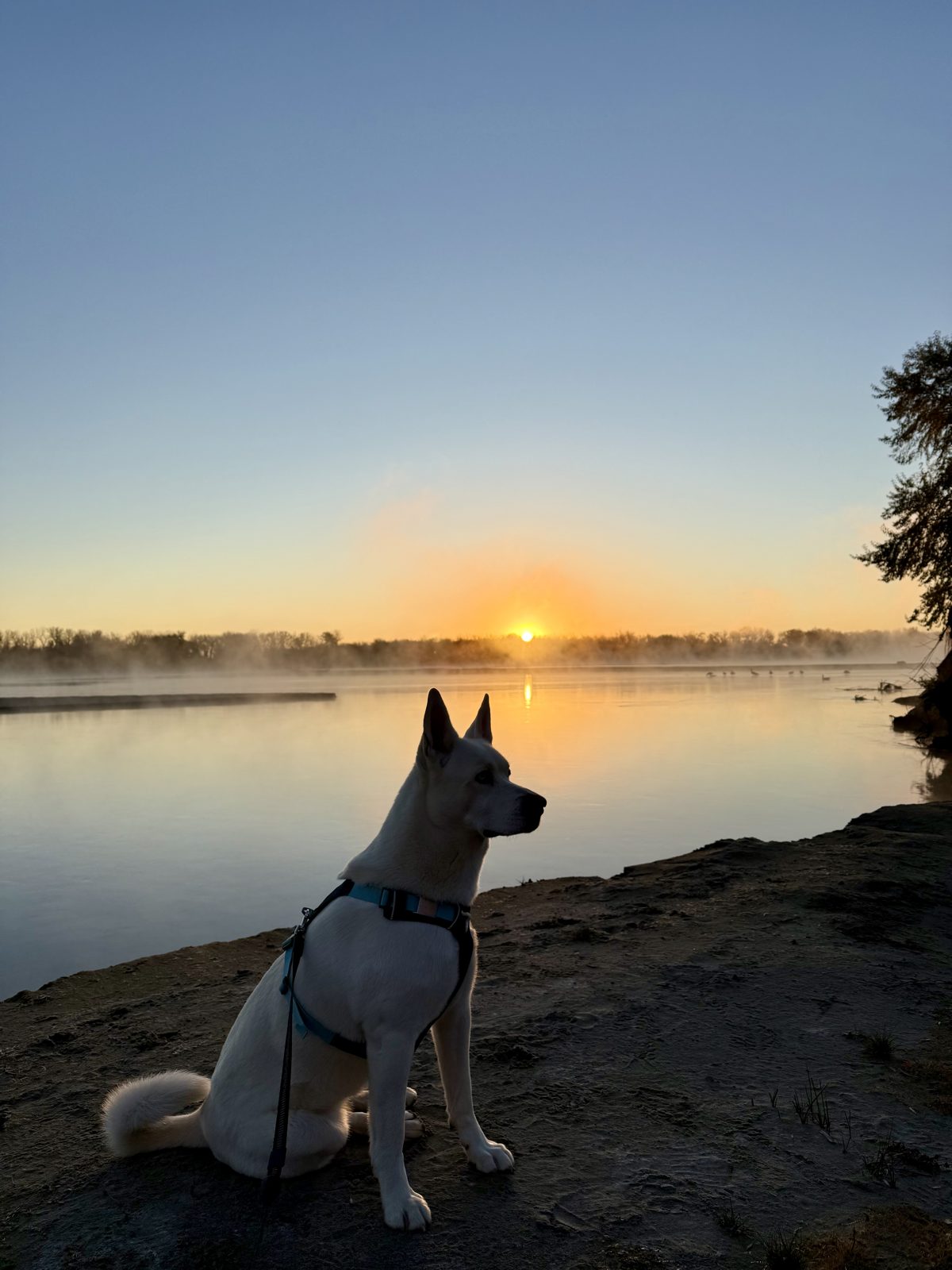
The sun didn't rise until 8am, but we got up early and packed up to hit the road for Theodore Roosevelt National Park, today's big destination. We watched the sunrise over the Missouri, made espresso down by the river, ate breakfast, and took a little stroll. We were on the road by 8:30am, cruising west across the plains on a bluebird, chilly North Dakota morning.
It was a little under two hours to the park, on railroad straight road, through flat nothingness, until buttes (sandstone hills with flat tops and steep sides, common in the badlands) emerged on the horizon, right where the park was supposed to be. Past the Painted Canyon overlook, the land got a bit more mountainous, dotted with cedar trees. There must be a bit more moisture and rain here.
Medora is the little town at the park's doorstep. A French nobleman, the Marquis de Morès, founded it in 1883 and named it after his wife, Medora von Hoffman, the daughter of a Wall Street banker. At a coffee shop in town, they told me they bring their bagels in fresh from another part of North Dakota, and that one woman called it the, “best bagel she'd ever had in her entire life.” Clearly she's never been to New York. That said, their chicken chorizo breakfast burrito slaps.
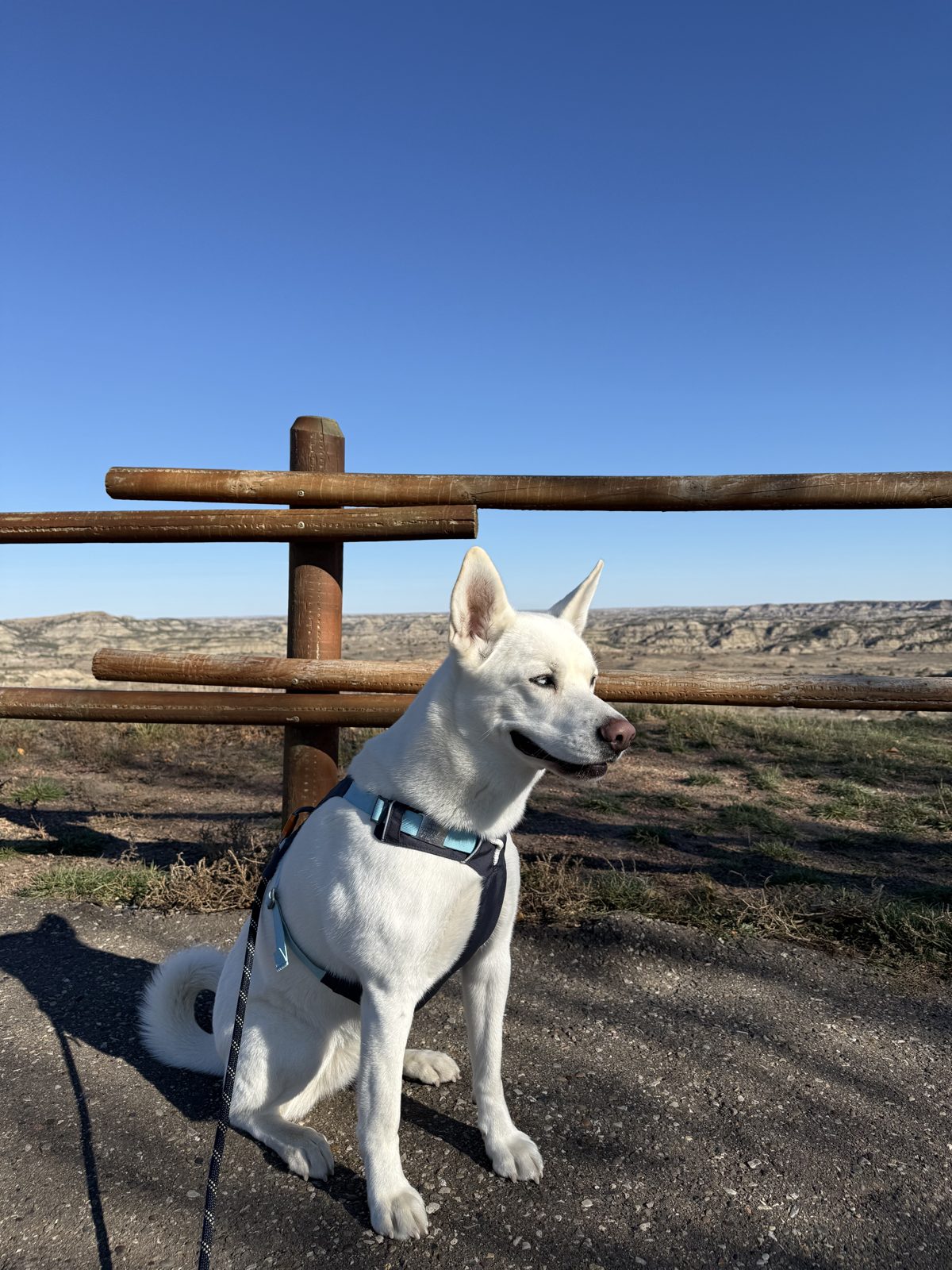
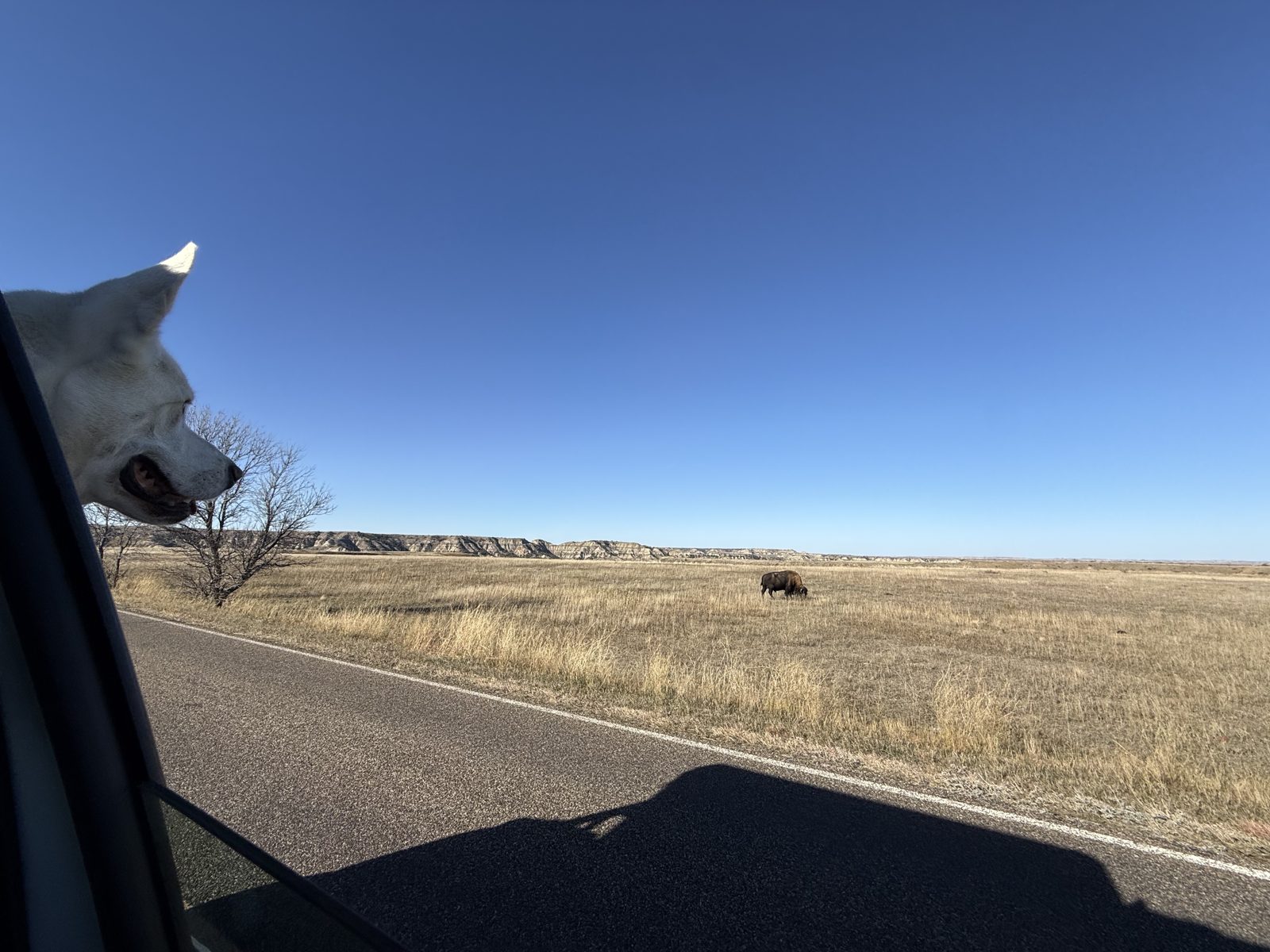
From Medora, the scenic loop runs a little over 30 miles through a picturesque part of the park. Dogs aren't allowed on the trails or off the pavement, so this was a truck trip for Rhea.
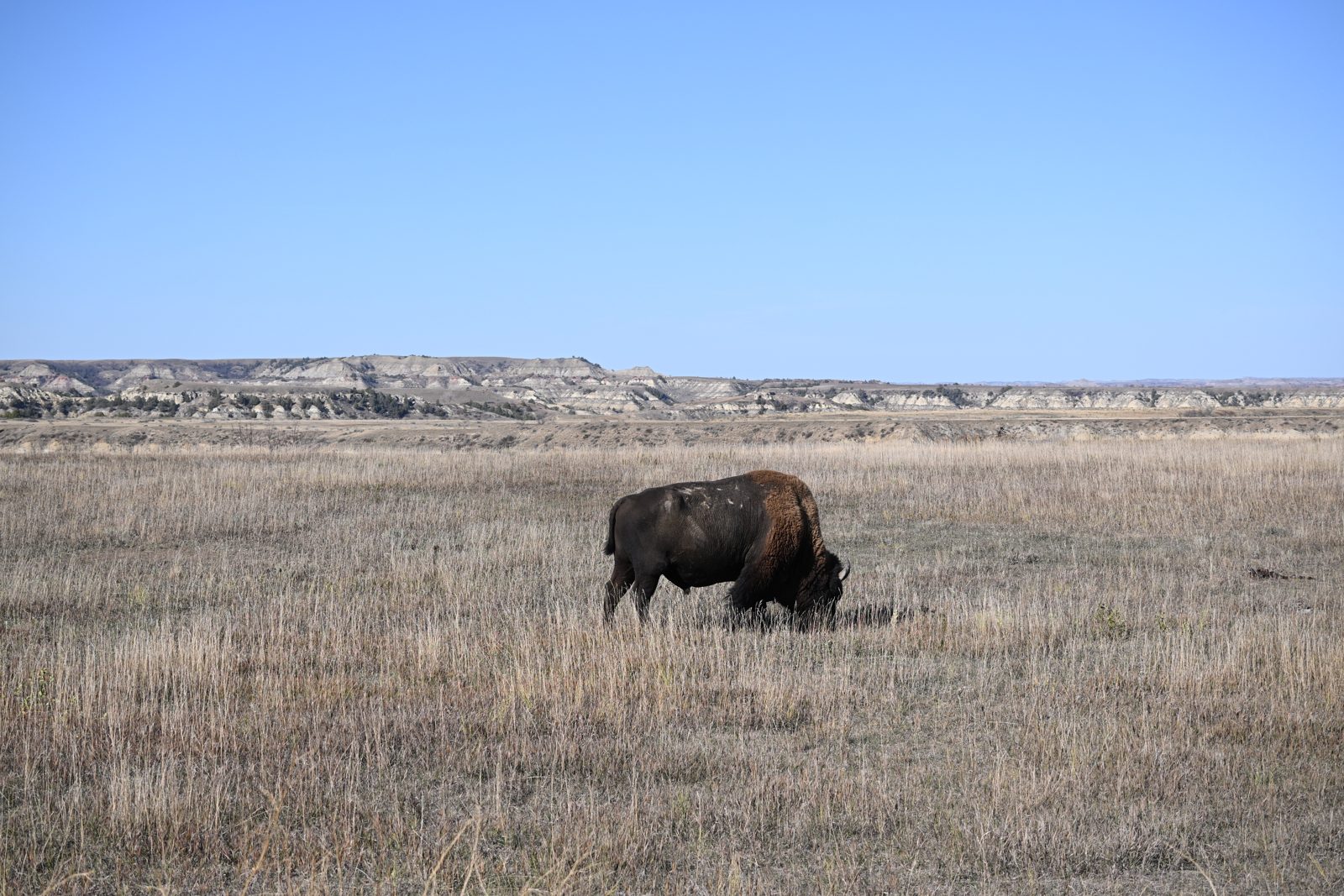
The badlands are a type of landscape, not one particular place. South Dakota's Badlands National Park is older rock, starker and more barren, in pastel bands of pink and tan. North Dakota's are younger, wetter, and grassier, and the Little Missouri River runs right through them. Drop down in some of the deep creek beds and there’s even water. Incredibly slow-moving streams that nourish the region's fauna. Mother nature finds a way.
About halfway through, we pulled over to stretch our legs and take a little sun nap in the truck. It was 65F, with the wind whipping across the plains. Perfect snooze weather.
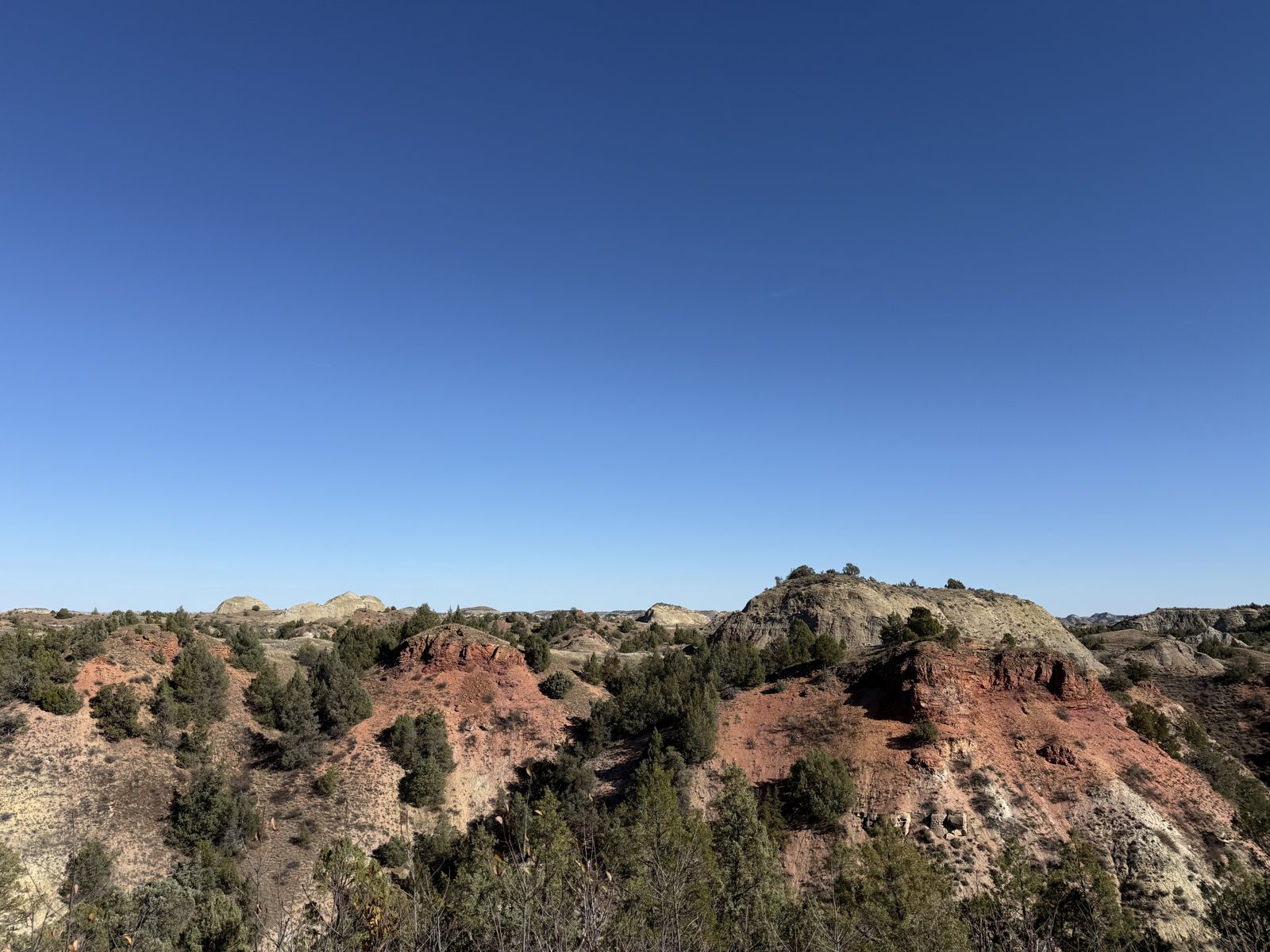
Back on the loop, we passed a sign that read, "Active coal fire, do not report." I could smell it, and you could see the dark coal vein set amongst the light sandstone mountainsides. Very cool. That's where the red caps on the buttes come from. When a seam of lignite coal burns underground, it bakes the clay and shale above it into a natural brick called clinker, or "scoria" locally. It's one of the hardest rocks in the badlands, so it caps the buttes. One seam in the park, at Buck Hill, burned for 26 years, from 1951 to 1977.
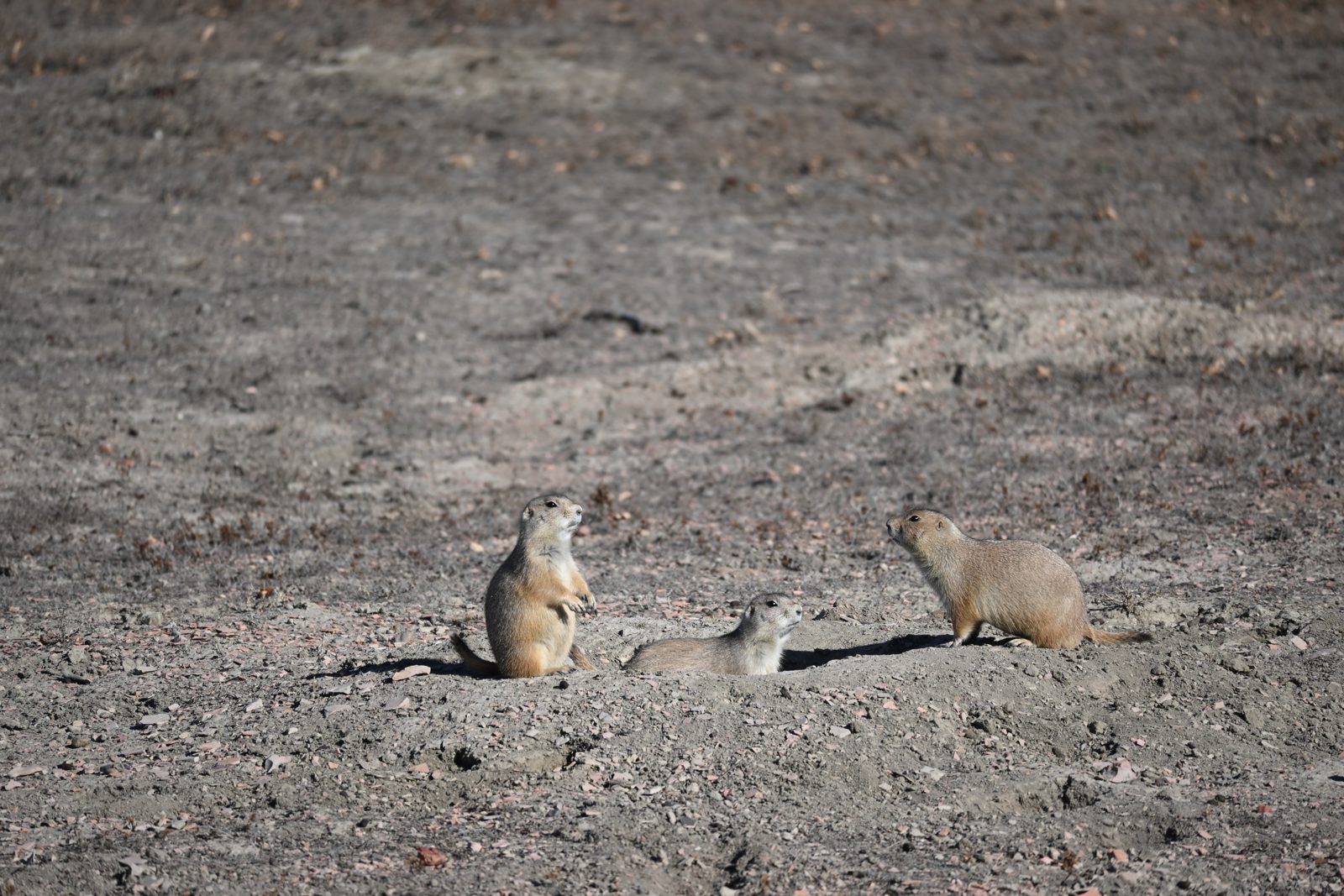
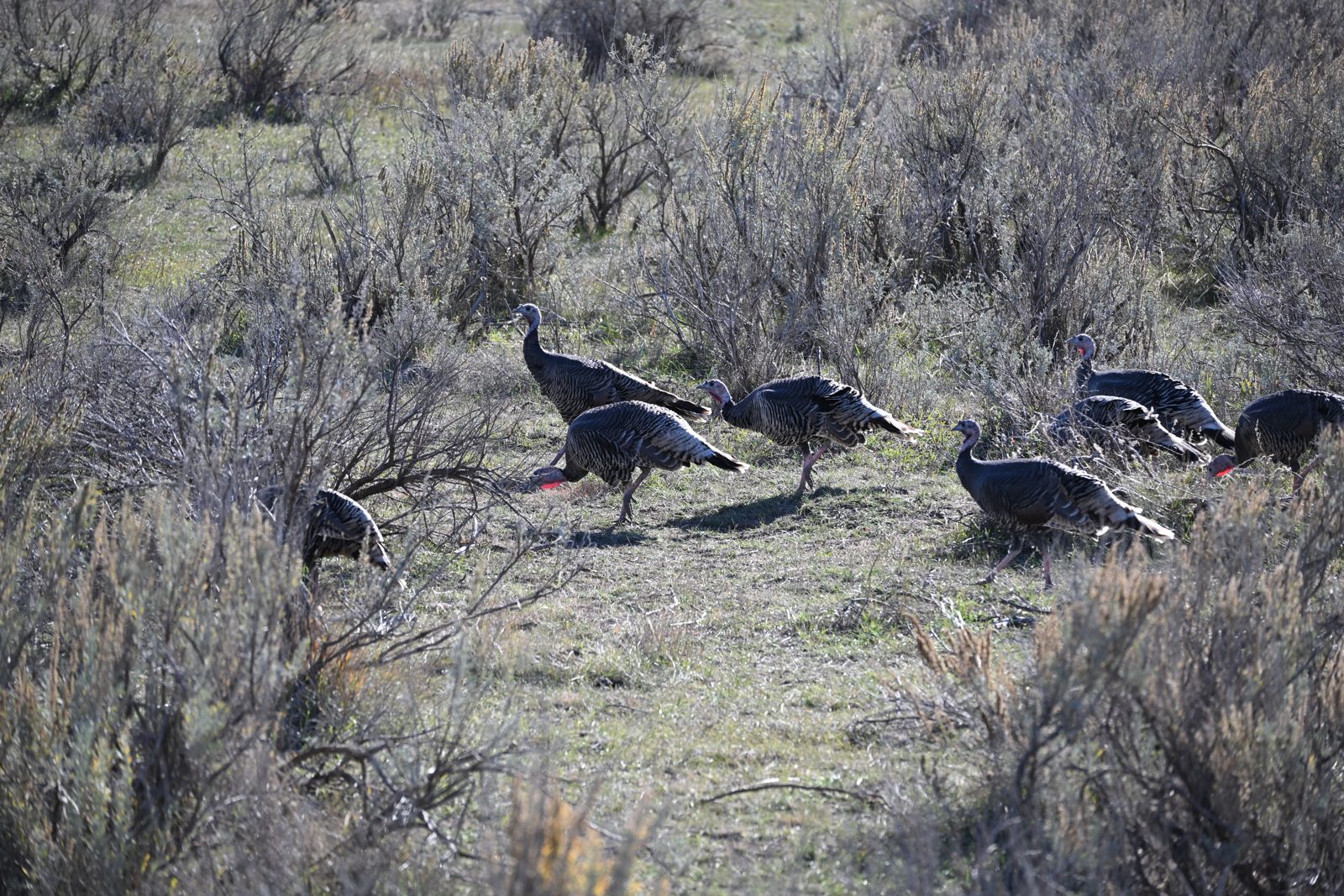
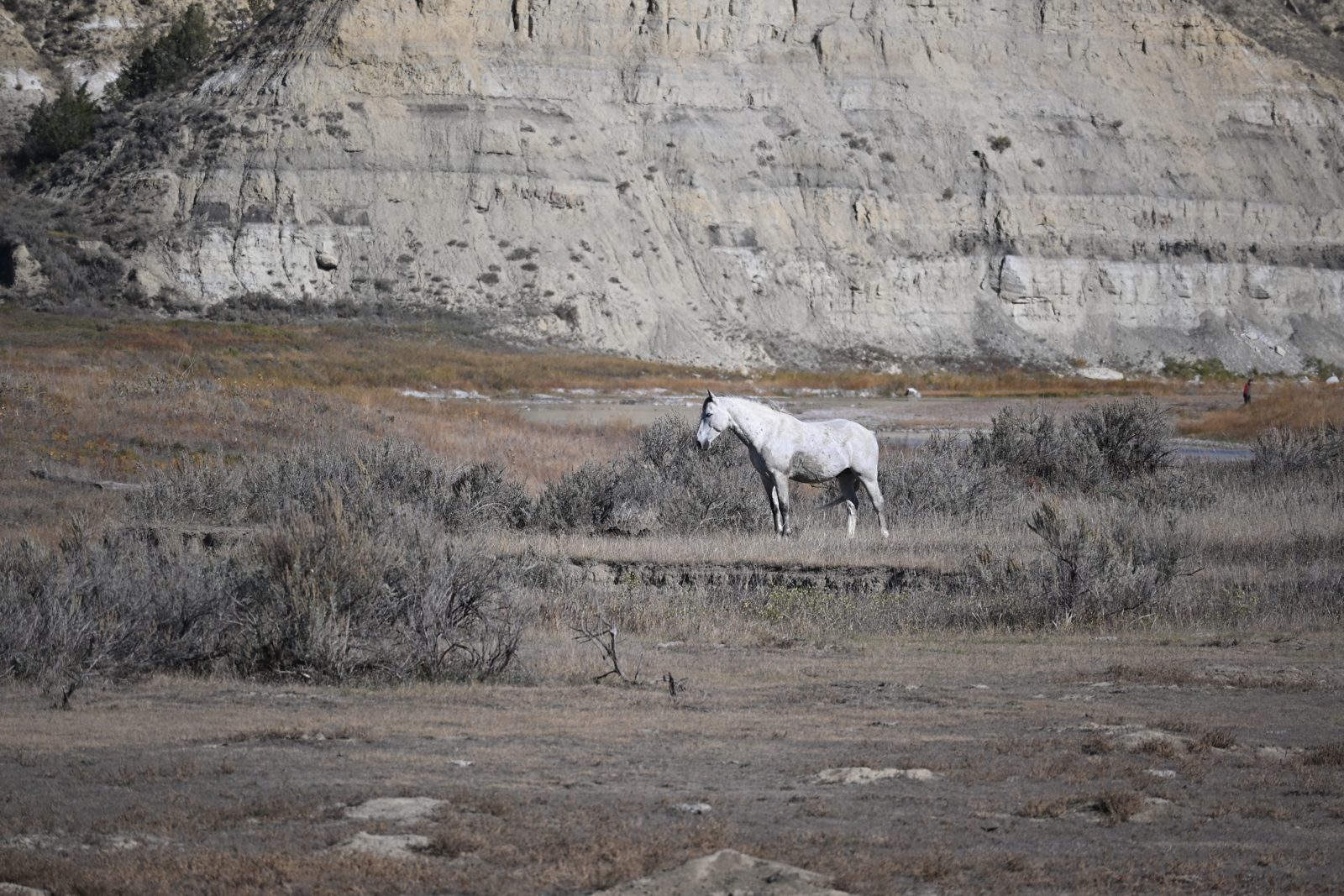
Theodore Roosevelt National Park was stunning. Badlands dotted with pines and cedars, wild horses roaming, bison throughout, more prairie dogs than we could count, and even a small flock of wild turkeys. Life is clearly abundant here, even through the dryness. I finally got to break out the new 250mm zoom on my Nikon to capture some of the distant animals. Its clarity put my iPhone to shame.
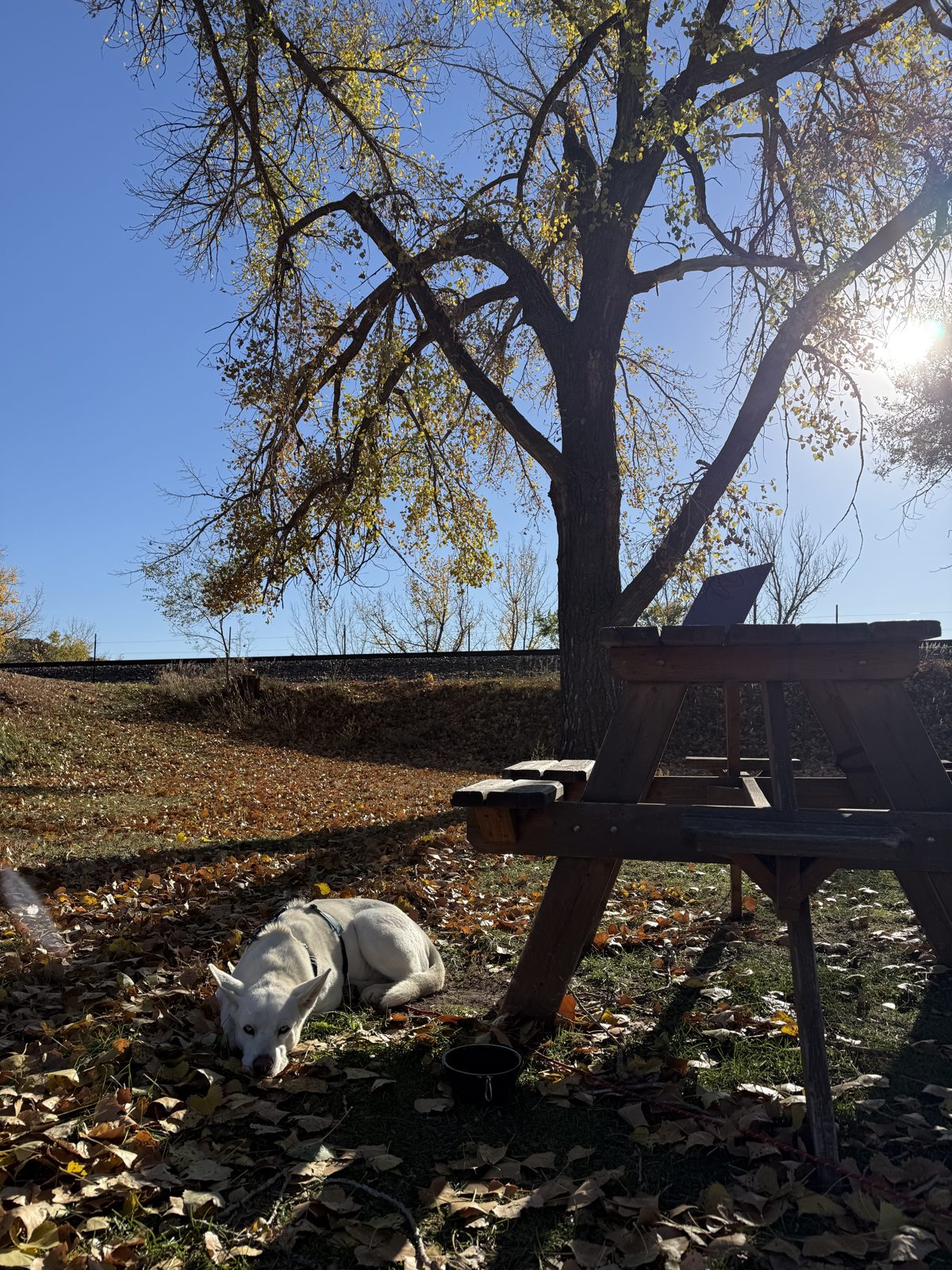
After the park, Rhea and I both needed a break from the truck, so we found a spot in town under some trees by the railroad tracks and set up shop. I had sardines and chips for a late lunch, and she had a bit too, this is becoming a theme for us. I posted up on a picnic table and wrote my first column for the East Hampton Press while she lounged on the leaves in the sun and took another well-deserved sun nap.
It's the dry season out here. Everything is as brown as can be. When I drove from Los Angeles to New York in mid-August 2024, South Dakota was teeming with rich prairie grass, freshly irrigated by frequent afternoon thunderstorms. Now, everything is slowing down and getting ready for winter.
The temperature out here is, interesting. It's coldest at sunrise and climbs all day. It doesn't peak midday; it peaks in the early evening. At 4pm it was 68F, and I had to switch into shorts in the truck, like yesterday. Once the sun gets close to the horizon, it cools off fast. The air is so dry that the temperature swings quickly, instead of gradually like back east.
Eastern Montana sure looks a lot like western North Dakota. Arbitrary lines dividing a seamless landscape. We crossed the Yellowstone River, lined with cottonwoods that have turned a beautiful gold and yellow, shimmering in the breeze. Cottonwoods are what Clark's men carved their canoes from in 1806 to float the Yellowstone on their way home.
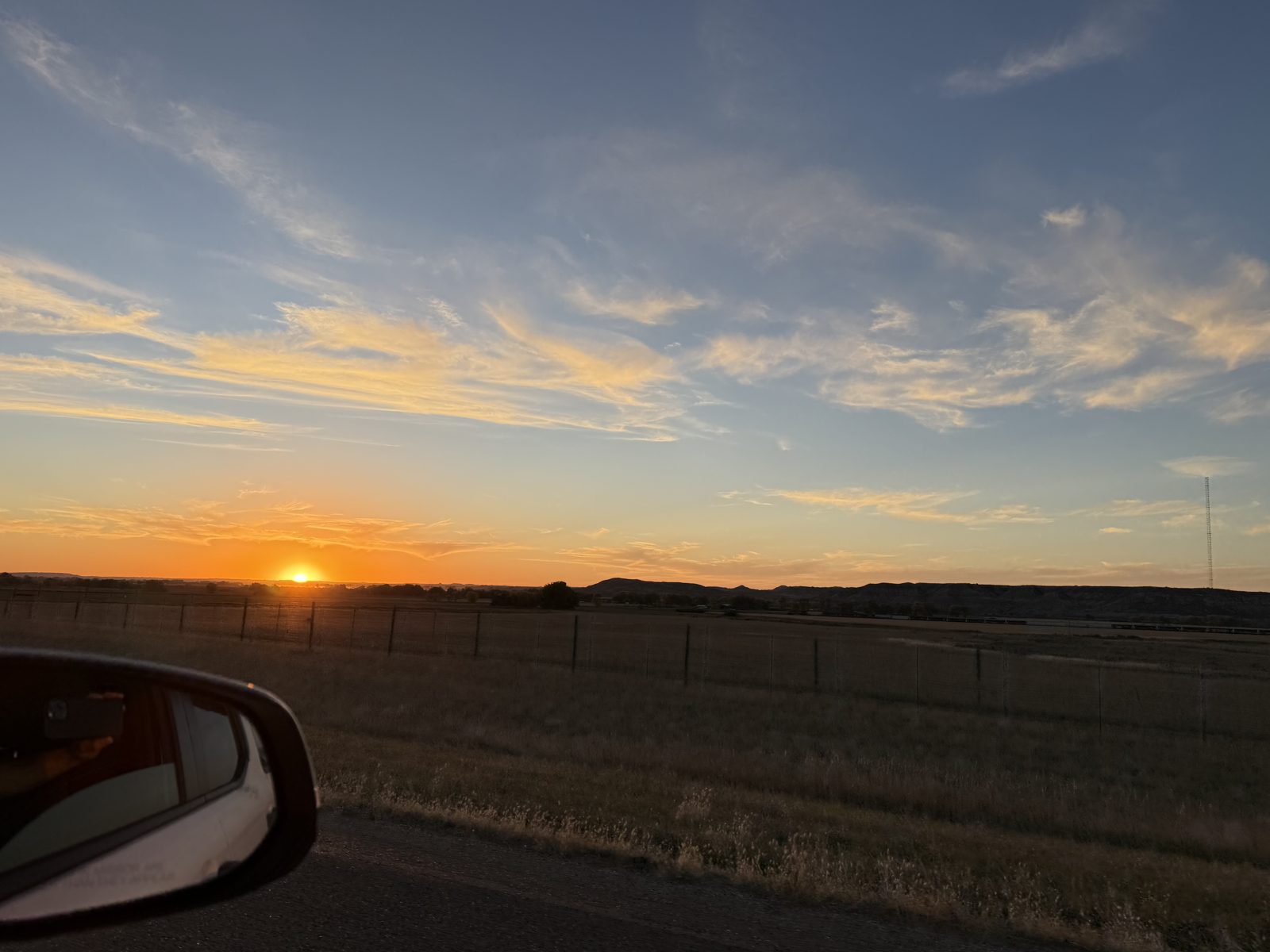
From Terry, MT, we chased the Yellowstone all the way to Miles City, with the railroad running alongside us and the sun on the horizon, driving southwest right into it. Not much out here but farmland and pastureland. The highways are quieter too, with fewer goods to move around. Rhea is a big fan of this.
A spectacular sunset over the Yellowstone on one side of the truck, and a half-moon rising in purple hues on the other. Grasslands finally starting to green up, and yellow cottonwoods shimmering along the way. Steinbeck wrote, "I am in love with Montana." I will forever dream of Montana sunsets. And then we saw wild horses, again…
Rhea
At around 3:30am, Rhea woke up doing her little snort and poking at the door like she had to go out. She wasn't having it when I tried to get her to lie back down. So I put on even more layers, shoes, and carried her down from the tent for a nice long pee. She saw something, turned toward the woods, and tried to make a break for it. I was not having it. I scooped her up, and we climbed back into the tent and fell into a deep sleep until about 6:30am.
In the park, the prairie dogs nearly broke her. She started whining and had a hard time not jumping out of the truck to chase and murder them all. Her prey drive is primal.
On the drive to Miles City, she ate two pieces of jerky from my hand in the truck! She'd only had chamomile to calm her down this afternoon, so the fact that she's eating on the road says a lot. Her comfort level is rising. She also appreciates an open road with fewer 18-wheelers rumbling past. She's a strong but sensitive girl.
Comments and suggestions
No notes yet. Be the first.